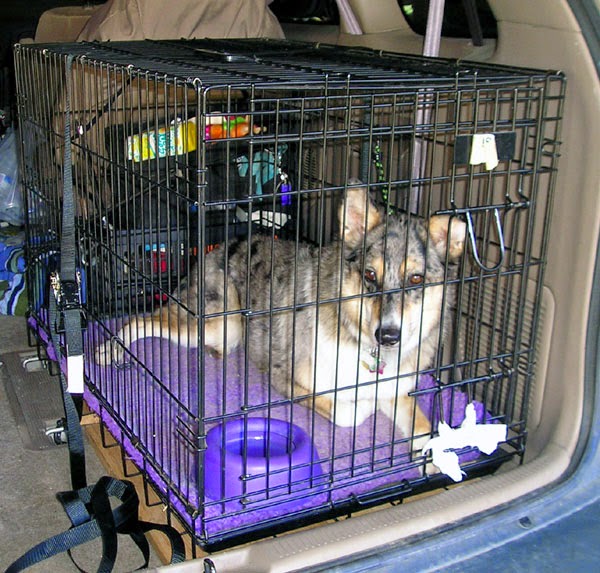
A dog crate (also called a kennel) is the best way to ensure your pet is safe when you are asleep or away from home. Dogs are den animals and most acclimate quickly to a small sleeping area. A proper introduction is all it takes to provide a safe haven for a pet.
Put the pet in the dog crate to ride home. All pets should be in a secure carrier while in a car. Use a hard carrier for transporting pets, and secure it with seat belts. You may want to use a different crate for sleeping, especially if the pet does not like to travel.
At home, grab some treats and squeak toys and sit down near the kennel. Show the puppy a tiny piece of treat and let them eat it. Toss a piece into the crate near the front. Continue to toss tiny pieces farther back in the dog crate and praise the dog for coming in and out of the kennel.
Showing posts with label puppy training. Show all posts
Sunday, October 5, 2014
Wednesday, August 27, 2014
How to Leash Train Your Excited Puppy or Older Dog
Does your puppy sit down, back up or pull to shake loose of the leash? Or worse yet does your older dog pull you down the street at breakneck speed when you put the leash on its collar? A few simple training sessions can help you walk your dog safely on a leash.
First, choose the proper leash. This article may help: Choosing the Right Leash For Your Puppy
Putting a leash on your new puppy for the first time
Putting a leash on an excited new puppy usually starts a chewing frenzy including rolling on the ground. Everything just short of a temper tantrum, especially if you hold the leash taut with no slack for the puppy.
A young puppy (under 12 weeks old) will have no idea what this rope around the neck is all about, and will understandably freak out. Leash training a puppy this young is not required as they will usually not venture far by themselves.
First, choose the proper leash. This article may help: Choosing the Right Leash For Your Puppy
Putting a leash on your new puppy for the first time
Putting a leash on an excited new puppy usually starts a chewing frenzy including rolling on the ground. Everything just short of a temper tantrum, especially if you hold the leash taut with no slack for the puppy.
A young puppy (under 12 weeks old) will have no idea what this rope around the neck is all about, and will understandably freak out. Leash training a puppy this young is not required as they will usually not venture far by themselves.
Subscribe to:
Posts (Atom)

